JX
Issue 02 · Beverly ParkChapter 0101 / 06

Issue 02 · Chapter 1 · Homeowner Story · Homeowner Story

Homeowner Story

For a stretch of the last decade, the estate at 70 Beverly Park was Paris Hilton's operational headquarters — a private compound where her creative teams worked, filmed, and hosted the parties that defined an era.

Beverly Park is not so much a neighborhood as a decision. Two guarded gates, a single winding road, and behind it — sixty-four estates that have, since the late 1980s, quietly hosted a rotating cast of the industry's most private homeowners.

For a stretch of the last decade, the estate at 70 Beverly Park belonged to that rotation in a very particular way. It was Paris Hilton's compound — not simply a residence, but the operational headquarters of a brand. Her creative teams worked out of it. Editorial shoots and campaign productions were staged in its ballroom and along its motor court. The parties that ran through it became, for a moment, the shorthand for a particular kind of Los Angeles evening.

What made the house work was never the square footage, though there is a great deal of it. It was the choreography: a formal entry that could receive two hundred, service wings that could stage catering for a week, guest quarters that could host a full production crew without ever touching the family side of the compound. Beverly Park houses are often described as grand. This one was engineered.

The estate has since changed hands, quietly, in the manner Beverly Park prefers. What it leaves behind is a small case study in how the Westside's most consequential homes are actually used — less as trophies than as instruments.

Issue 02 · Beverly ParkChapter 0202 / 06

Issue 02 · Chapter 2 · Real Talk · The Boring Secret Behind Every Deal We Close

The Boring Secret Behind Every Deal We Close

Everyone wants the shortcut — the script, the algorithm, the one trick that makes the phone ring on its own. The answer disappoints people every time: there isn't one. What actually moves the needle is unglamorous, repeatable, and a little boring.

The Boring Secret Behind Every Deal We Close
Bryce Lowe

Bryce Lowe

Partner · Listing Agent

Kirby Gillion

Kirby Gillion

Partner · Buyer Advisory

The market rewards the honest conversation. Everything else is theatre.

Everyone wants the shortcut. The script that closes every call, the algorithm that finds every seller before the next agent does, the one trick that makes the phone ring on its own. We get asked about it constantly, and the answer disappoints people every time: there isn't one. What actually moves the needle in this business is unglamorous, repeatable, and — frankly — a little boring. It's consistency. And in a market like this one, it's the only edge that hasn't been priced out.

Bryce runs the same block every morning: cold calls from 8 to 11, fifty minutes on, ten minutes off, then back into it. No exceptions for a slow week, no skipping it because the market “feels” dead. That's the point — the market genuinely is the worst it's been in years, and the business still gets done. Not because the phones get easier to pick up, but because showing up on the worst days is what separates the agents who are still standing in twelve months from the ones who quietly disappeared. Two seconds of deciding to be outside the box, and put in the work anyway, is the whole difference.

Kirby's version of the same discipline looks a little different: it's the follow-up nobody else bothers to send, and the listening that most agents fake their way through. There's a real temptation in this job to treat rapport like a performance — mirror their energy, remember a detail, get hired. Kirby's rule is simpler and harder: build a genuine connection for exactly as long as it takes to earn trust, then let the work speak. Not friendship as a tactic. Just paying attention like it actually matters, because it does.

We tell the story about Marina's listing appointment every few months because it never stops being the clearest example we have. She went into a meeting hours from home, alone, already several appointments deep with no signed agreement to show for it — and something shifted. Instead of filling the silence, she stopped talking. She focused entirely on what the seller was actually saying instead of what she wanted to say next. That appointment ended differently than the others: she got the listing, and later, the buyer side too. Same market. Same seller pool. The only variable that changed was how closely she was paying attention.

There's a line we repeat to newer agents when they blame a slow month on their bank account: the problem is almost never the money, it's the consistency. A cash-flow crunch is usually just a symptom of skipped mornings and half-finished follow-up sequences weeks earlier. The fix isn't a better month — it's better systems, applied on the days it's hardest to want to apply them.

None of this works if the conversation itself isn't honest. We say it often, because it's easy to forget in an industry built on optimism: the market rewards the honest conversation, and everything else is theatre. The honest price. The honest timeline. The honest reason the last offer walked. Clients don't remember the agent who told them what they wanted to hear — they remember the one who told them the truth early enough to actually act on it.

So if there's one thing worth taking from this issue, it's this: consistency doesn't feel like a strategy while you're in it. It feels like showing up to the same call block on a day you don't want to. It feels like sending one more follow-up nobody asked for. But do it long enough, honestly enough, and the deals stop being individual wins — they start compounding. That's not a hack. It's just the work, done on repeat, longer than everyone else is willing to do it.

Issue 02 · Beverly ParkChapter 0303 / 06

Issue 02 · Chapter 3 · Featured Listings · Featured Listings

Featured Listings

The current roster — active, in escrow, and recently closed — across Beverly Hills, Bel Air, Malibu and the Hills.

Featured Listings
Issue 02 · Beverly ParkChapter 0404 / 06

Issue 02 · Chapter 4 · Neighborhood Spotlight · Neighborhood Spotlight

Neighborhood Spotlight

A closer look at four LA institutions we send friends to on repeat — Hugo's Tacos, Cafe Belen, Proof Bakery, and Homegirl Café. Not a directory. A magazine feature on the rooms that hold their neighborhoods together.

Neighborhood Spotlight

Feature No. 01 · Studio City · Atwater Village

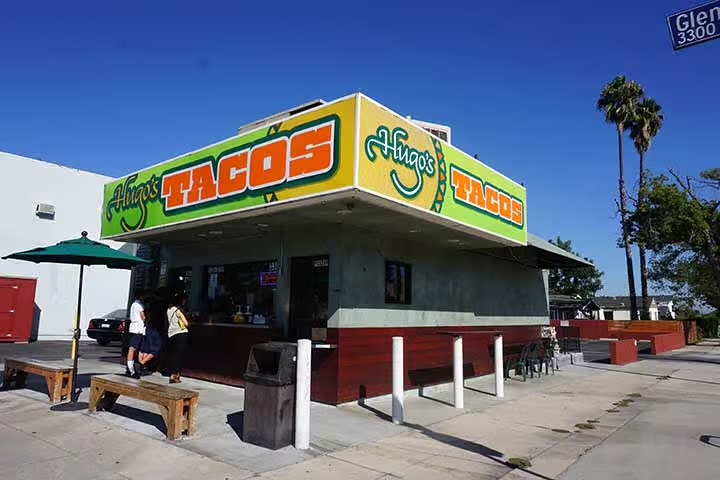
Hugo's Tacos

Est. 2005 · Open daily · 10a–10p

Hugo's Tacos

There's a very particular kind of Los Angeles corner that Hugo's occupies — the kind you drive past a hundred times before you finally pull over, and then you pull over every week. The Studio City stand sits under a green-and-yellow awning that has aged into the block; the Atwater location does the same trick a few miles east. Both feel less like restaurants than like small civic institutions.

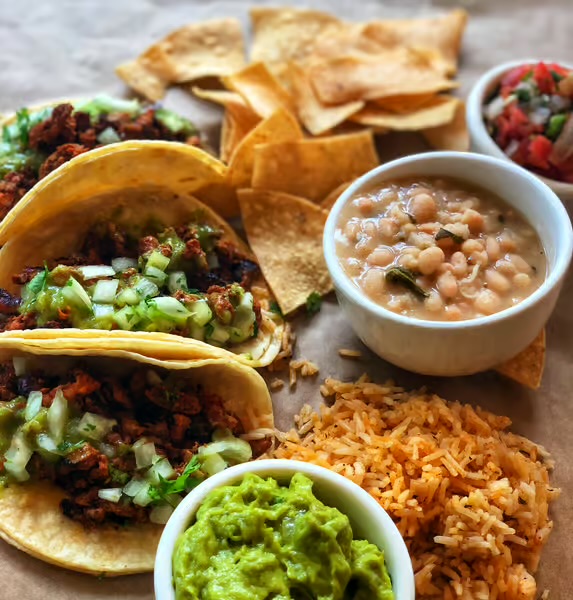
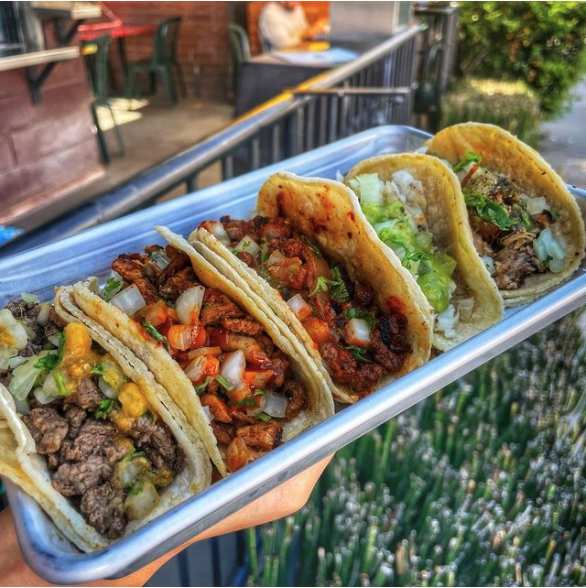
The tacos themselves are the reason, but they aren't the whole reason. Al pastor comes off the trompo with the char that only slow heat gives you. Carne asada is cut small enough that every bite gets a corner. The salsas — a running rotation of six, plus whatever the kitchen felt like making that morning — are labeled by hand and refilled by hand and never quite the same twice.

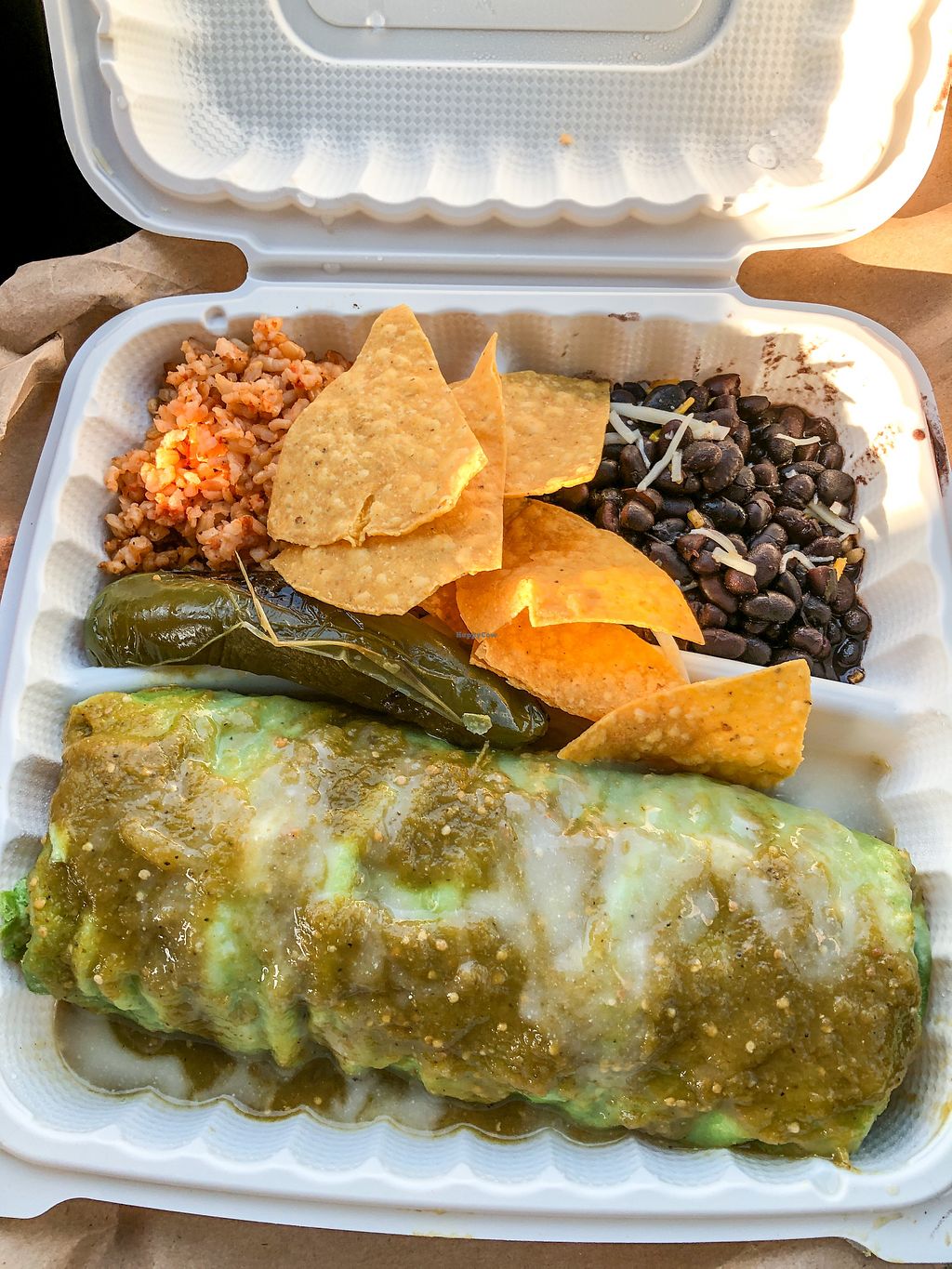
What Hugo's does that most taco stands don't is treat vegetarians and vegans as full citizens. Soyrizo migas. A green burrito that has quietly become a landmark. Rice cooked in vegetable stock so the whole plate makes sense together. It is, in a city that pretends to be plant-forward and often isn't, one of the few places where the menu was designed that way from the start rather than bolted on later.

The staff is what turns the food into a habit. The counter is quick without being rushed, and there is always — always — someone who remembers your order from the last time. That's the corner Hugo's occupies: a place where a stranger becomes a regular in two visits, because someone bothered to remember.

The al pastor plate — chips, beans, guacamole, and the salsa rotation of the day.
A tray at the Atwater window: asada, al pastor, carnitas, and the vegetarian jackfruit.
The green burrito — quietly a landmark of its own.

Feature No. 02 · Highland Park

Cafe Belen

Open Wed–Sun · 8a–3p

Cafe Belen

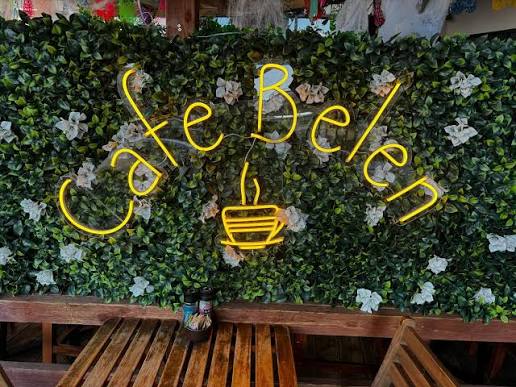
You find Cafe Belen almost by accident — down a residential stretch of Highland Park where the storefronts thin out and the bougainvillea takes over. The sign, in neon script against a wall of living green, is the first hint you're in the right place. The second hint is the smell of cinnamon and dark coffee wafting from the patio before you've even seen the door.

The room is small and the patio is smaller, but both are used the way rooms and patios in Mexico City are used — like extensions of the street, open, unhurried, everyone talking a little too loudly. The menu holds close to Oaxacan and Poblano tradition: cafe de olla brewed with piloncillo and canela, chilaquiles that arrive under a proper blanket of salsa verde, molletes on bread the kitchen bakes itself.

What makes Belen feel different from the wave of prettier cafes that have opened around it is the sense that the owners were not designing for a photograph. They were building a place they wanted to sit in. The wooden benches are the wooden benches from someone's family kitchen. The pan dulce is baked in small batches and sold when it's ready and gone when it's gone. The tea comes in a clay cup because it should.

It is, in a neighborhood that changes as fast as Highland Park does, a genuinely rooted room — the kind of morning stop that feels like it always was there and always will be, whether or not the block around it agrees.

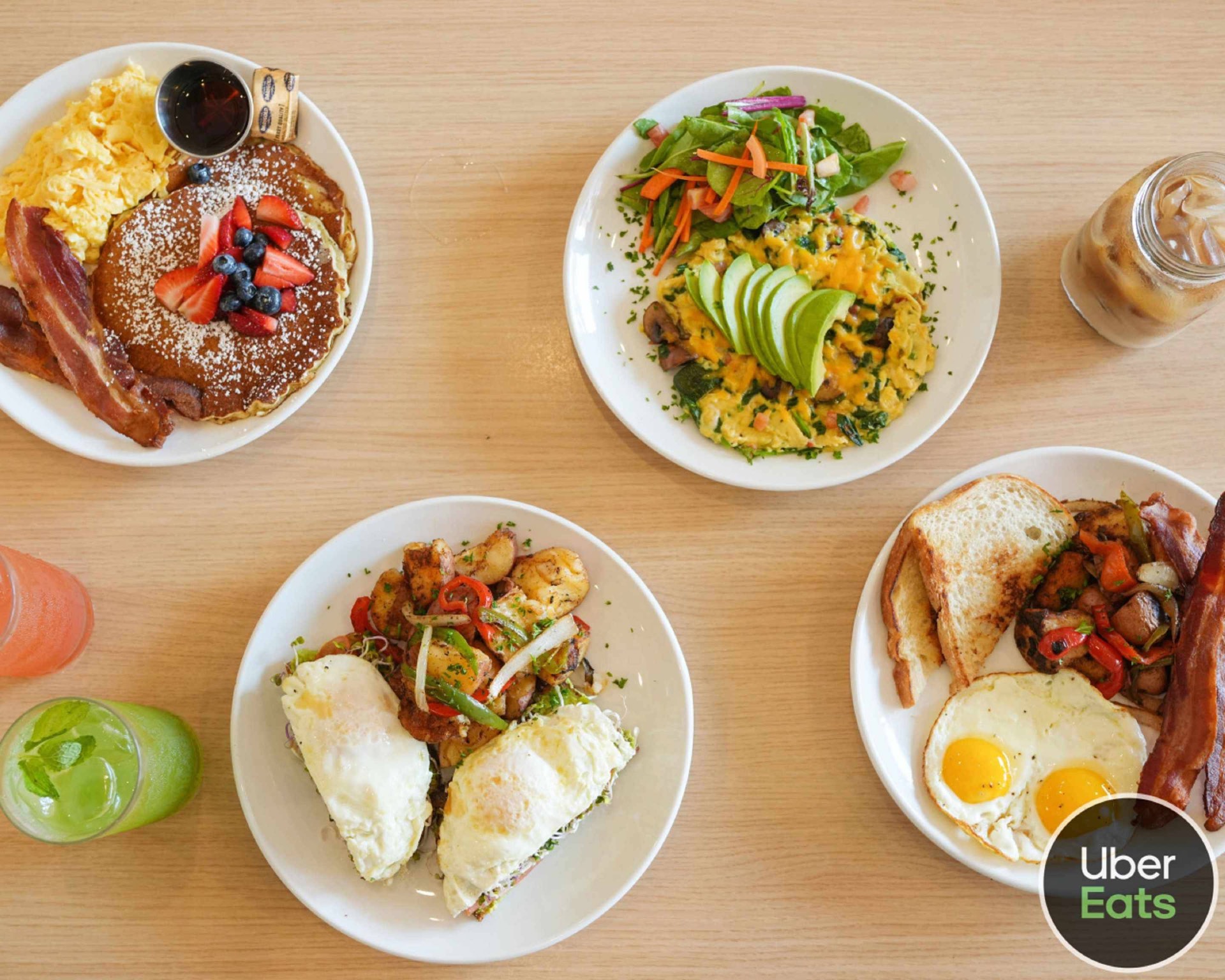
A weekend spread on the patio — chilaquiles, the pancake stack, veggie scramble, and the seasonal aguas frescas.

Feature No. 03 · Atwater Village

Proof Bakery

Est. 2010 · Open daily · 7a–4p

Proof Bakery

Proof has been on its Glendale Boulevard corner long enough that the neighborhood is now shaped around it — the cyclists who stop in at 8, the parents who move in after school pickup, the writers who claim the same window seat every afternoon and are politely tolerated for it. It's a bakery, technically, but the room functions as something closer to a shared living room for a stretch of Atwater that didn't have one before.

The pastry case is where the argument for the place begins. Kouign-amann with the crackle you only get from a bakery that takes lamination seriously. Almond croissants glazed dark and heavy the way they're supposed to be. Morning buns rolled tight enough that the sugar caramelizes into the seam. And a rotating tart program that leans hard on whatever fruit the market had that week.

The coffee is treated with the same care as the pastry, which is not a given in a bakery. Cortados are pulled short and served in a proper glass. Filter coffee changes every few weeks and is described by the baristas without any of the performance the trade sometimes invites. Nothing about the operation feels like it's trying to prove anything — which is, of course, the point.

That the whole thing stays affordable is the quiet miracle. Proof is priced like a neighborhood bakery in a city that mostly stopped having those. It's why the room fills at 7 and doesn't empty until close, and why the corner it occupies still feels like a neighborhood rather than a scene.

Feature No. 04 · Chinatown · Downtown LA

Homegirl Café

Est. 2004 · Open Mon–Fri · 7a–3p

Homegirl Café sits inside the Homeboy Industries headquarters on Alameda, and the two are inseparable in the way that matters. The café is a working restaurant with a serious kitchen — the chilaquiles are among the best in the city, the pastries are baked in-house from before dawn, the salsas are made by people who take salsas seriously. It also happens to be one of the most consequential social enterprises in Los Angeles.

Homeboy is the largest gang-rehabilitation and re-entry program in the world, and the café is one of its training grounds. The women behind the counter, in the kitchen, and running the pastry program are rebuilding their lives out of hardships the rest of the room mostly cannot imagine — incarceration, domestic violence, gang involvement, everything in between. Every plate served here is a step in that rebuild, and every table sat at is part of the economics that makes the rebuild possible.

What makes the café work as a restaurant, and not merely as a mission with a menu, is that the food is genuinely good. The kitchen operates with real ambition. Guests come for the chilaquiles and stay for the coffee and end up bringing their friends the following week, and none of that would happen if the room only had the story going for it. The story is the reason it exists. The cooking is the reason it lasts.

It is, in a city that talks a lot about supporting its neighbors, one of the most direct ways to actually do it — sit down, order breakfast, tip well, and know that the meal in front of you is quietly part of a much larger repair.

Issue 02 · Beverly ParkChapter 0505 / 06

Issue 02 · Chapter 5 · Design Sessions · The $400 Upgrade That Outsold a $40,000 Renovation

The $400 Upgrade That Outsold a $40,000 Renovation

Buyers don't fall in love with your renovation budget — they fall in love with a feeling. And you can build that feeling for a fraction of what most people assume.

The $400 Upgrade That Outsold a $40,000 Renovation
Adding value on a budget isn't about spending smarter. It's about seeing what's already there clearly enough to know what to take away.

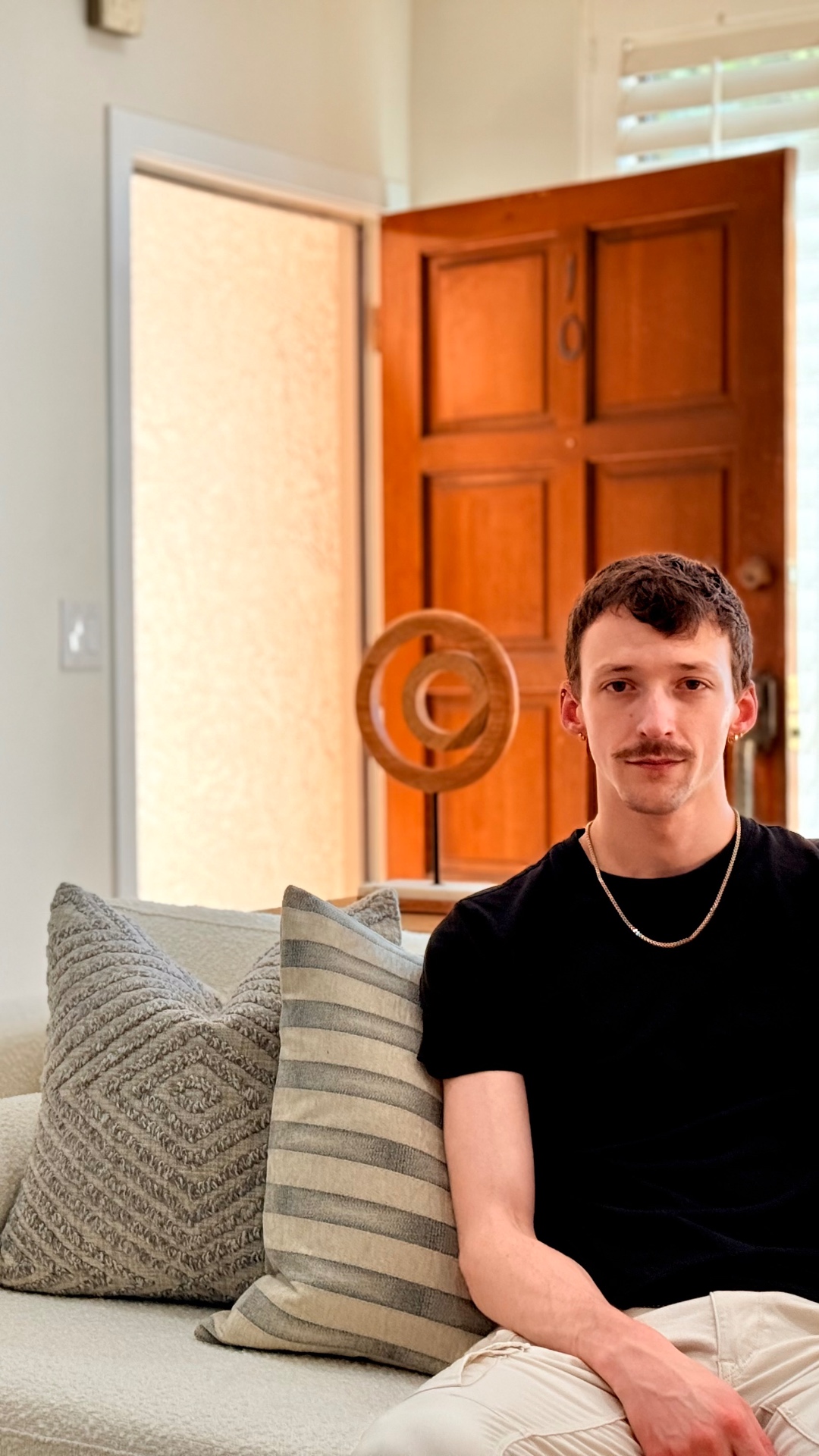
I spent ten years inside Studio Jackson Home, sourcing and placing pieces for clients who never once asked what something cost before asking whether it was right. That kind of training teaches you a lot about beauty — but it doesn't teach you what most homeowners actually need, which is how to make a house feel considered without an unlimited budget behind it. Since leaving to work directly with homeowners, building homes from scratch that blend Studio Jackson's eye with whatever a client is actually trying to say about their own life, I've learned the real lesson lives in the gap between those two worlds: I once watched a seller spend forty thousand dollars gutting a kitchen for a buyer who never showed up, and then watched a different house, three doors down, sell for more with nothing but fresh paint, new hardware, and a light fixture from a showroom floor. That's the moment I stopped believing bigger spend equals bigger return. It doesn't. Buyers don't fall in love with your renovation budget. They fall in love with a feeling, and you can build that feeling for a fraction of what most people assume.

Start with light, because nothing ages a room faster than the wrong kind of it. Swap out builder-grade fixtures for something with a little personality — you don't need designer prices, just intention. Then go straight for hardware: cabinet pulls, door handles, faucets. These are the details a buyer's hand touches before their eyes even catch up, and dated brass or scuffed chrome quietly tells them the whole house hasn't been cared for, even when it has. A $150 hardware swap can change how an entire kitchen reads.

Paint is still the highest return-per-dollar move in the business, and it's not close. But it only works if you're honest about the goal — you're not decorating for yourself, you're neutralizing the room so a stranger can imagine their own life in it. Warm whites, soft greiges, anything that lets the architecture and the light do the talking. I've seen a five-gallon bucket do more for a sale price than a week of contractor work, simply because it removed every reason a buyer had to picture someone else's taste instead of their own future.

Here's the part people skip because it doesn't feel like “value”: edit down before you add anything. Half the homes I walk into don't need new furniture — they need less of the furniture they already have. Clear a countertop, remove a piece from every room, let the space breathe. It costs nothing and it's the single fastest way to make a home feel larger, calmer, and more expensive than it is. Add value on a budget isn't about spending smarter. It's about seeing what's already there clearly enough to know what to take away.

Issue 02 · Beverly ParkChapter 0606 / 06

Issue 02 · Chapter 6 · Stay Close · Stay Close

Stay Close

Follow along in real time — new homeowner stories, fresh listings, and the small conversations that never make the printed edition.

Stay Close

The Finale

Stay close to the next chapter.

Follow along in real time — new homeowner stories, fresh listings, and the small conversations that never make the printed edition. Everything Lucent, as it happens.

Bryce & Kirby · Partners
Jaice Gardner

Founder · Lucent Journal

Jaice Alexander Gardner

Meet Jaice →